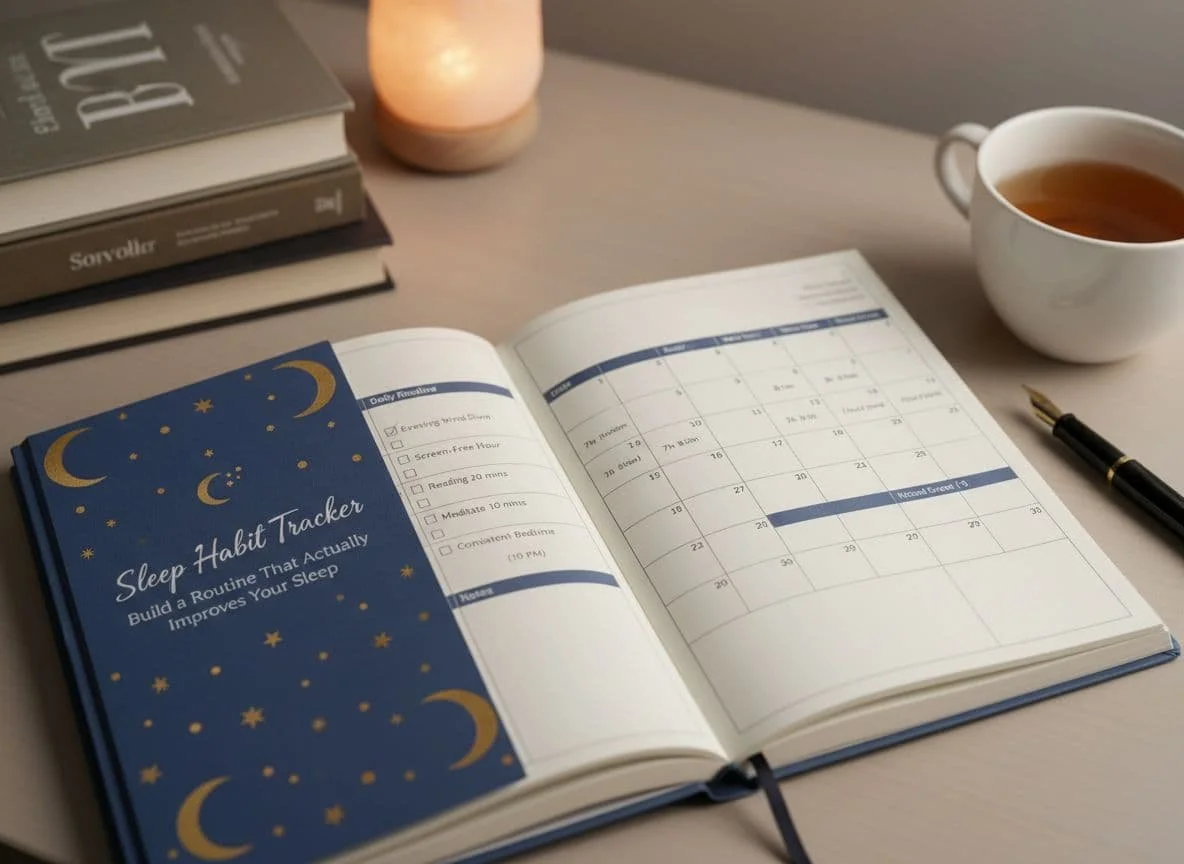
If your nights seem haphazard, you are not alone. Most of us know whether we slept “fine” or “horribly,” but we can’t articulate why. This is where a sleep habit tracker can make a difference. Was it late coffee? Did you scroll in bed? Is your room too warm, or are there just stressful things under the covers with you?
Connecting the dots, a sleep habit tracker can be your friend. It metamorphoses blurry mornings into actionable patterns for small adjustments that can compound to better sleep.
What a sleep habit tracker really tracks (it’s not just bedtime)
The sleep habit tracker is nothing more than a way to log what you did before bed, what your night was like, and how you felt the next day. That system might be a notebook, sleep-tracking app, ring, or watch—or something in between.
Here’s the key: a habit tracker cares about inputs (the choices you make), not just outcomes (how long you slept).
A run-of-the-mill sleep tracker or sleep monitor will estimate the stages of sleep and the total time people spend asleep. A behavior tracker provides context, such as
- When you stopped caffeine
- When you turned off screens
- Whether you exercised
- Your stress level
- Alcohol, heavy meals, or late snacks
- Room conditions (light, noise, temperature)
Think of it like a food diary for sleep. The goal isn’t perfection. It’s spotting the one or two levers that move the needle for you.
The “right” things to track (so you don’t quit after three days)
Most people track too much, too soon. Then it becomes homework, and the habit dies. Start with a short list you can do in under two minutes.
Track these 5 basics for two weeks
1) Bedtime and wake time: Not “time in bed,” but when you tried to sleep and when you got up.
2) Wake-ups: Quick estimate, even if it’s “a lot.”
3) Morning energy (1 to 5): Your most honest score.
4) Caffeine cutoff time: When you had your last coffee, tea, or energy drink.
5) Screen cutoff time: When you stopped scrolling or watching.
If you’re using a wearable sleep tracker, let the device capture the background stats. Your job is to log the behavior pieces the sensors can’t see.
Add one “why” marker when you’re ready
Choose one, not five:
Stress level: low, medium, or high.
Alcohol: none, 1 drink, 2+ drinks.
Exercise: yes or no, and what time?
Bedroom temp: cool, ok, warm.
Those are often enough to reveal patterns fast. For example, a 10:30 pm screen cutoff might correlate with fewer wake-ups, even if you can’t fall asleep instantly.
Pick your tracking tool: paper, app, or wearable
There isn’t one best answer, because the best tool is the one you’ll keep using on tired mornings.
Option 1: A notebook habit tracker (surprisingly effective)

Pen and paper succeed because they’re frictionless. No battery, no login, no stats vortex. This is a relaxed way to start if numbers tend to make you anxious.
An uncomplicated grid: date, bedtime, wake time, caffeine cut-off (dependent on your chosen exercise), screens off (the same caveat applies), energy score, and notes.
Option 2: A sleep tracking app (best for low-cost structure)
A sleep tracking app might prompt you to wind down, track habits, and occasionally predict sleep duration based on phone motion or microphone readings. Tracking ‘app only’ isn’t as reliable as a device, but it’s still very useful for habit work since habits are the things you’re looking to change.
App estimates can get noisy if you bed-share, have pets who join you in bed, or keep your phone off the mattress. That’s not a problem though, because your habit logs still matter.
Option 3: A wearable sleep tracker (best for consistent nightly data)
Quantifying trends you can’t always feel directly—such as changes in resting heart rate or how often you woke up—wearables can capture. A wearable sleep tracker can help if you’re a fan of data and patterns.
Recent 2026 reviews continue to suggest rings and other wearables are beloved for comfort and overnight tracking, as seen in our review. Ring-style trackers are popular because a lot of people find them less heavy and cumbersome than a watch to sleep with.
An example of comfortable overnight tracking with a smart ring,
If you’re shopping, it helps to scan a few roundups to compare pros, cons, and pricing. These lists can give you a feel for what’s out there without locking you into one brand:
- Best sleep trackers of 2025: Data That Matters (strong basics and buying guidance)
- The Best Fitness Trackers We’ve Tested for 2026 (good for broader wearable comparisons)
- The Best Sleep Trackers in 2026 (consumer-friendly picks)
- Best sleep tracker (helpful for quick comparisons)
Option 4: A no-wear sleep monitor (best if you hate gadgets on your body)
Not everyone can sleep with a device on their wrist or finger. Under-mattress sensors or other comparable products are also able to serve as a sleep monitor without physically being on you. This can be a nice solution if you need more applicable data but cannot stand the thought of wearing devices.
What makes the best sleep tracker for you (a quick reality check)
The best sleep tracker isn’t always the most expensive. It’s the one that fits your sleep style and your personality.
Ask yourself:
Will I wear it all night? If not, skip it.
Will the data make me calmer or more stressed? If stats trigger worry, keep it simple.
Do I want coaching or just logging? Some tools push suggestions; others stay quiet.
Am I okay with a subscription? Some devices and apps lock insights behind one.
Do I need medical answers? Consumer trackers aren’t a diagnosis tool.
If you suspect a sleep disorder, snoring, or breathing pauses, a tracker can flag patterns, but it cannot confirm what is happening. Take it to the professionals as a talking point, not the word of law.
Turn tracking into better sleep (without trying to “optimize” everything)
Tracking is only valuable if it impacts what you do. “The basic idea is to just run small experiments like you do in the kitchen,” said Dr. Achenie. Change one ingredient and otherwise keep things steady, then taste.
Use a 3-step loop: notice, test, keep
Notice: Look for the same problem 3 nights in a row (late bedtime, wake-ups, groggy mornings).
Test: Change one habit for 7 nights.
Keep: If mornings improve, keep it. If not, swap the experiment.
A common mistake is trying to fix sleep with five new rules at once. When it fails, you won’t know why.
A practical tracking setup (simple, but detailed enough)
This is a balanced layout that works with a notebook or notes app:
| What you track | Why it helps | Keep it simple |
| Bedtime, wake time | Shows schedule consistency | Use real times, not “in bed” time |
| Wake-ups (estimate) | Tracks sleep fragmentation | 0, 1 to 2, 3+ |
| Morning energy (1 to 5) | Your real outcome metric | Don’t overthink it |
| Caffeine cutoff | Links stimulants to sleep quality | Write the time |
| Screens-off time | Links light and arousal to sleep | Write the time |
| One extra marker (stress, alcohol, exercise) | Adds context | Pick only one |
After 10 to 14 days, scan for patterns. If your energy score drops after late caffeine, that’s actionable. If your best mornings happen after morning workouts, that’s also actionable.
A 14-day sleep habit tracker plan you can stick with
This plan keeps your workload light and builds momentum.
Days 1 to 3: Baseline (no changes)
Track the basics only. Don’t try to “be good.” You’re collecting clues.
Days 4 to 10: Run one experiment
Pick one change that feels doable, not heroic:
Set a caffeine cutoff: Try no caffeine after 1:00 pm.
Set a screen cutoff: Stop phone use 45 minutes before bed.
Pick a wind-down anchor: a shower, stretching, reading, or a short journal note.
Fix the wake time: Same wake time, even on weekends (within reason).
Keep tracking. If you’re using a sleep tracking app or wearable sleep tracker, don’t obsess over daily swings. Look for a trend across the week.
Days 11 to 14: Review and choose your “default.”
At the end of two weeks, pick one habit to keep as your baseline rule. When you have a rough week, return to that rule first.
A sleep habit tracker works best when it becomes boring, like brushing your teeth.
Common issues: accuracy, anxiety, and privacy
Wearables aren’t perfect, and that’s fine
Consumer devices typically estimate sleep stages from movement and heart signals. They can be good for trends, but they are not going to compare with a clinical sleep study.
If your device tells you that you slept terribly, but you feel pretty good, go by how you feel. And your morning energy score is there too.
Watch out for “score chasing.”
Sleep scores can tip you into control mode, in which sense you assume that you are “winning” sleep. That can backfire. As you see anxiety rising, bury the detailed metrics and stick with habit inputs.
In that case, the point of a sleep tracker may be to demonstrate that a calmer routine matters more than a perfect chart.
Be intentional with data sharing
A sleep monitor or sleep tracking app may collect health and device data. Before you commit, read the privacy settings, check what’s stored, and decide what you’re comfortable sharing.
If you want a quick overview of current product options and how they’re being tested, this recent review roundup can help: The best sleep tracker for 2026, tested and reviewed.
Conclusion: Track less, sleep more
You don’t need a fancy sleep habit tracker to make it work. Track a couple of behaviors, observe patterns, and run one tiny experiment at a time. When you keep it simple, the process feels supportive rather than stressful, and your sleep has room to get better.
If you already own a sleep tracker or wearable sleep tracker, use it as a flashlight, not as the judge. Your next step is simple: Begin tonight with five basics, then grant yourself 14 days of training in what your body’s been asking for. Consistency beats perfection every time.
Key Takeaways
- A Sleep Habit Tracker logs behaviors that affect sleep, helping identify patterns for better rest.
- Track basic metrics like bedtime, wake-ups, and morning energy for actionable insights.
- Choose a tracking tool—whether a notebook, app, or wearable—that fits your routine and preferences.
- Run simple experiments over 14 days to discover what habits enhance your sleep quality.
- Keep the process enjoyable; small changes lead to improved sleep without overwhelming stress.
Estimated reading time: 9 minutes


Best slot experience I have had in a while. The bonuses are generous and the support team is very helpful. Cheers to mpo1881slot.
Finally an app that does not lag during peak hours. The mobile experience is top notch and everything is so intuitive. Love using br5hbetapp on my phone while commuting.
Really impressed with the payout speed here. It is hard to find a platform that actually pays out fast these days. Glad I found brpk44.
Great vibes and very easy navigation. I love how simple it is to deposit and start playing. Check out vnnohu60 for quality fun.
Had an amazing run here last night! The atmosphere is exciting and the payouts are very fair. jili178casino