And if you’re a busy adult, you likely have the same goal every single winter (scratch that—and back-to-school season): take care of your immune system to decrease frequency of illness as much as possible with lifestyle choices. If you’re wondering how to boost your immune system naturally through daily habits, you’re not alone. But attempting to support immune system health can get complicated quickly. One person is all about the supplement stack; another, cold showers; someone else, clean living and “detoxing.” It’s a lot.
Here’s the grounded truth. Supporting the immune system does not involve “supercharging” your body. It means supporting your immune system to be strong and balanced, with your innate immune system providing the first fast response and learning from pathogens how best to respond with a tailored defense upon seasonal exposure.” It was ready when needed for action and could stand down once incoming threats had been vanquished. Daily habits are more important than any quick fix, and most people won’t see changes in days—but rather over weeks.
This guide covers food, sleep, stress, movement, hydration, and smart supplement use. Quick safety note: if you’re pregnant, immunocompromised, or taking immune-related meds (or blood thinners), check with a clinician before starting supplements.
Start with the basics your immune system needs every day

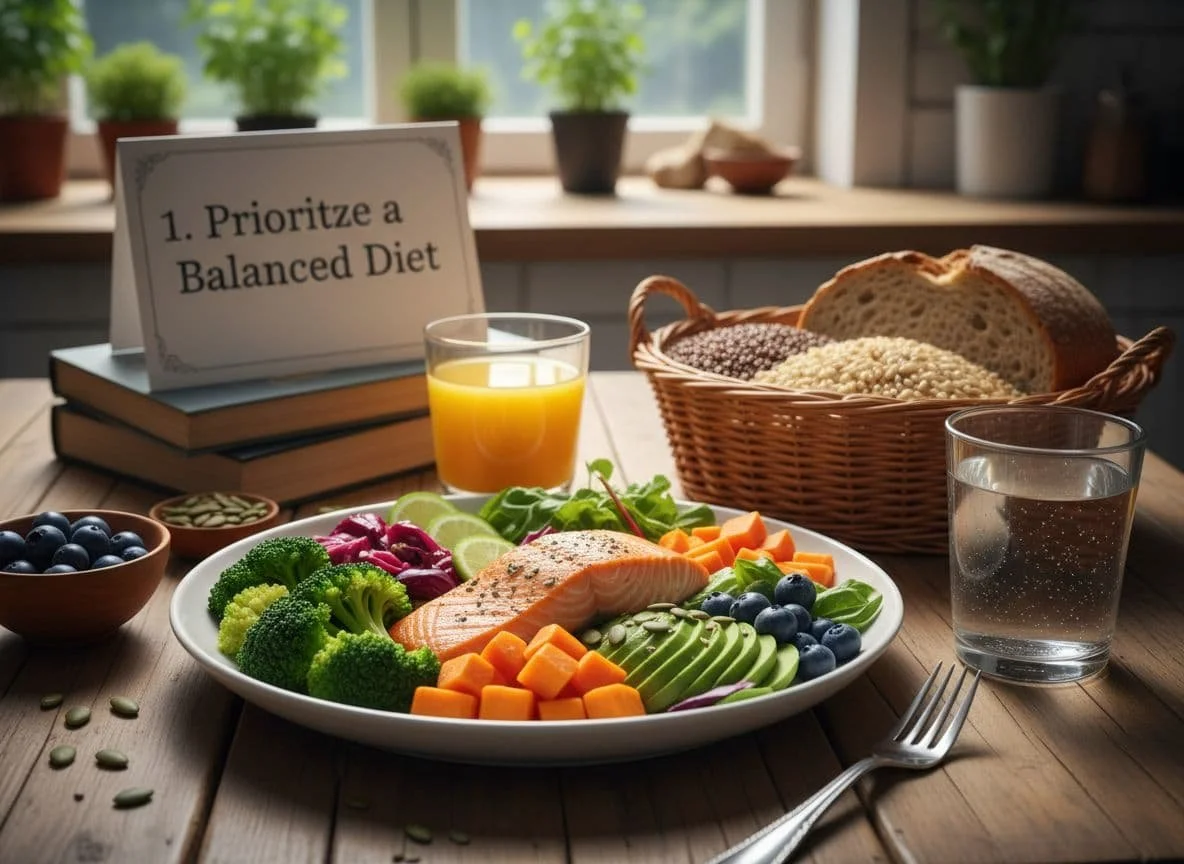
Balanced “build a plate” meal ideas using colorful plants, protein, and healthy fats.
A lot of immune advice is theatrical, but the essentials are quieter and more consistent. Consider your immune system as a well-run fire department. It requires a well-trained staff (your white blood cells), reliable tools (nutrients), and a tight schedule (sleep and recovery). Skip the fundamentals for a while, and small problems become bigger ones that tax your immune system.
Two places to start have a decent chance of paying off quickly: eating in a manner that covers nutrient gaps and getting enough sleep so immune signals remain steady. If you make only two modifications this month, that’s where to begin.
For a plain-language overview of what helps most, see How Does Exercising Help the Immune System? . It matches what many clinicians tell patients in real life: your daily routine sets the tone.
Eat in a way that feeds your immune cells (not just your cravings)
“Eat healthy” is vague. A more practical approach is to aim for balance: construct a plate you can repeat without really having to think too hard about it: Half some kind of lively-colored plant, something proteinaceous and hearty that you like, and a little healthy fat. This blend supports the functioning of immune cells, steady energy, and a gut ecosystem that assists in controlling inflammation as part of a balanced diet.
Helpful targets:
- Aim for 5 to 9 servings of fruits and vegetables per day as a practical range, not a moral scorecard.
- Try a simple weekly goal: add 1 new plant food each day (a new fruit, veggie, bean, herb, or whole grain). Variety matters because different plants bring different fibers, phytonutrients, micronutrients, and antioxidants.
Easy examples that hit the immune basics:
- Breakfast: Greek yogurt or kefir with live cultures, berries, and chia seeds (add a spoon of nut butter for staying power).
- Lunch: Bean-and-lentil soup with a side salad of leafy greens, olive oil, and lemon.
- Dinner: Salmon (omega-3s) with roasted bell peppers and broccoli, plus brown rice or quinoa.
- Snacks: Citrus, sliced orange bell peppers, a handful of nuts and seeds, or hummus with carrots.
Key food groups to keep in your rotation:
- Citrus and bell peppers for vitamin C.
- Leafy greens like spinach and kale for a broad nutrient mix.
- Beans and lentils for fiber plus minerals that support immune cell work.
- Nuts and seeds for vitamin E, zinc, and healthy fats.
- Yogurt or kefir with live cultures to support the gut barrier.
- Fatty fish like salmon and sardines for omega-3s.
- Olive oil as a daily fat that plays well with anti-inflammatory eating.
This isn’t about perfection. It’s about repeating a few meals that cover your bases. On hard weeks, even “good enough” plates add up.
Sleep is when your immune system resets.

A calm, sleep-friendly bedroom setup with soft lighting and a restful mood.
The ideal amount of sleep for most adults is a range of seven to nine hours. And that’s not just for mood or focus. When we sleep, our body produces and responds to immune signals that help fight infection by restoring barriers (such as the skin, airways, or lining of the gut) and other protective mechanisms. That’s because when nights without good rest pile up over several days or longer, your defenses can lose some of their edge, and it may be easier to pick up a common cold.
A short sleep checklist that works in real homes:
- Consistent wake time, even on weekends (within about an hour).
- Morning light within the first hour you’re awake, even if it’s cloudy.
- Caffeine cutoff 8 to 10 hours before bed (earlier if you’re sensitive).
- Cool, dark room (blackout curtains and a fan can do a lot).
- 20-minute wind-down (stretching, shower, reading, or calm music).
If you wake up at 3 a.m., let it be boring. To keep lights dim, avoid scrolling on devices and do some slow breathing (try extending the exhale). If you are wide-awake after about 15 to 20 minutes, get up and stay somewhere dark until you are sleepy enough to go back to bed. The idea is to train your brain that bed equals sleep, not stress.
Lower inflammation with movement, stress relief, and hydration.
“When food and sleep are in a good place, the next is dialing down ‘background noise’ in the body.” Persistent stress and dehydration, and long periods of sitting for hours at a time, can push the body toward more inflammation. That does not mean you are doing something wrong. That means your system is responding to life.
On the plus side, even small changes matter. You don’t need a perfect gym schedule or a Zen-like mind to support immune balance. You need repeatable routines that work for your day.
For a practical view of what tends to help during a rough season for respiratory infections, this public health roundup is worth a skim: How Does Exercising Help the Immune System?.
Move most days, because regular exercise trains immune defenses.
Until we have more information, moderate exercise helps our immune system in many ways. It enhances circulation (thus getting immune cells to where they need to be), supports metabolic health and a healthy weight, and helps balance inflammation. The sweet spot is consistency. When sleep and calories are low, extreme training with inadequate recovery can also backfire.
Simple targets most people can use:
- 150 minutes per week of brisk walking (or similar moderate physical activity).
- 2 strength sessions per week, even if they’re short.
If your week is packed, use “micro-moves” that don’t require willpower: - Take a 10-minute walk after a meal.
- Do stairs for 5 minutes.
- Knock out a quick bodyweight circuit (squats, wall push-ups, and a plank), then stop.
Someone who is concerned about the recovery can do much to improve their odds of a successful outcome. Schedule at least one easier day a week, lightly stretch if you feel tight, and get plenty of food overall—including protein to help your body recover and adapt. If you frequently feel weak after workouts (especially with a cold), reduce efforts and ramp up slowly.
Chronic stress can wear down your defenses; here’s how to bring it down.
Chronic stress isn’t simply “in your head.” When chronic stress remains high, signals including cortisol can cause the immune response to become less organized. In time, that could mean that you catch things more easily, heal slower, or feel worn out.
You don’t need a long routine to get (or stay) in shape. You want to have one tool that you’re going to use when your nervous system is revved up. A simple menu:
- One-minute breathing (slow inhale, slower exhale) when you feel keyed up.
- Five-minute guided meditation when your mind won’t stop spinning.
- Journaling when you’re carrying too much in your head.
- Time in nature when you feel overstimulated.
- Social connection (text a friend, eat with someone) when you feel isolated.
- Therapy or CBT skills when stress is constant or tied to anxiety.
- Limit doom-scrolling by moving apps off your home screen or setting a timer.
Try a low-pressure challenge: pick one tool and use it daily for 7 days. Not forever, just a week. Many people notice better sleep and fewer cravings, which supports immune health too.
Use supplements and natural remedies wisely, not as a shortcut
Dietary supplements can be of service here, but they function most effectively as plug-ins, not as bases. If your diet is takeout-heavy, your sleep short, and your stress level high, no capsule is going to “patch” that. A more constructive frame is food first, then limited targeted dietary supplements in the presence of clear, specific reasons.
Safety guardrails keep this simple:
- Follow the label unless your clinician says otherwise.
- Don’t stack a bunch of new products at once.
- If you’re pregnant, have kidney disease, have an immune condition, take blood thinners, or take immune-related meds, talk with a clinician before taking dietary supplements.
A physician-written overview that aligns with this approach is natural immune support guidance.
The few supplements with the best track record (and how to take them safely)
Vitamin D: A vitamin many are low in, especially in winter or with indoor jobs or little sun. It is known that vitamin D plays a role in regulating the immune response. In studies, supplementation appears to be most beneficial in those who are initially low. If you are concerned about it, a blood test can help with dosing, and be smart and do not megadose without medical guidance.
Zinc: it contributes to the maintenance of the normal function of the immune system. It is best known for lozenges used shortly after the beginning of a cold, preferably on the first day. Higher doses taken continuously for long periods can create issues (such as copper imbalance), and because they may upset your stomach, high doses are not the form of E you’d take forever for most people.
Selenium: This essential mineral is critical to antioxidant defenses and immune function as part of a comprehensive multi-faceted support rotation. Brazil nuts and seafood are among the top food sources, but test levels if you’re thinking about an extra.
Probiotics: Your gut is a major immune hub where antibodies function, and probiotics may help some people; choice of strain matters. Lactobacillus rhamnosus GG and Saccharomyces boulardii represent two of the most commonly investigated strains. Risk: If you try one, give it a few weeks and keep an eye on tolerance. If it makes you bloated or gassy or causes discomfort, it perhaps wasn’t the perfect match.
Vitamin C: Food sources are the low-hanging fruit (citrus, kiwi, bell peppers, berries). Supplements are optional. Vitamin C pills don’t offer the same benefits for many people who are otherwise healthy and have access to fresh fruit and vegetables, but they can be a good option if you find it hard to eat fresh produce when you’re traveling or on especially busy days.
If you need some clinician-style advice on habits to adopt during cold and flu season, this immune-support overview is an enlightening read.
What’s new in 2026: zeaxanthin and other “promising” trends to treat carefully
There is always a new “it” ingredient to work into your pantry. In 2026, zeaxanthin is receiving more focus outside of just eye health. Preliminary lab and animal studies show that it could enhance components of CD8+ T cell activity, which is part of the immune response to targeting abnormal cells. That is interesting science, but it’s not the same as providing proof that a supplement will prevent illness in humans.
The bottom line here is simple: eat foods high in zeaxanthin first. You can find it in spinach, kale, and orange peppers (which just so happen to offer fiber and other nutrients that your body already knows what to do with). When you read boldfaced assertions on a bag of zeaxanthin pills that it “boosts immunity fast,” consider that marketing, not fact.
A quick way to sanity-check any new remedy:
- Does it have human trials, not only lab results?
- Are the claims realistic, not “cure everything” language?
- Is the product safe for your health history?
- Could it interact with meds or other supplements?
Natural support should be an addition to good care, not a replacement for it (including vaccinations as a primary means of protection from specific pathogens). If you have symptoms that won’t let up, don’t be swayed by the hype to forsake medical guidance that is consistent with whatever your circumstances may be.
Conclusion
If you hope to help immune system function improve naturally in 2026, keep it boring in the most exciting way. Center meals around plants and protein, prioritize sleep as if it were a meeting that cannot be canceled, move most days, drink enough water, and employ stress tools in our real-life toolkit for healthier living. Supplements can address it when there’s a real reason, but they aren’t going to be your first move.
Here’s an easy place to start: In two weeks of change, in Week 1 concentrate on sleep and add two plant foods to what you eat each day—even if they’re just some berries and a bagged salad. In Week 2, it’s time to add the 10-minute walks after meals and select one stress tool to practice daily. It’s also helpful to monitor your energy and sleep quality, as well as immune response (how often you get sick), over 6 to 8 weeks.
If you’re getting frequent infections, dealing with ongoing fatigue, or managing a health condition that affects your immune system, talk with a clinician so you can get personalized, safe support.
Key Takeaways
- Supporting your immune system involves consistent daily habits like balanced nutrition, good sleep, and stress management, rather than quick fixes.
- Aim for a diet rich in colorful plants, protein, and healthy fats, with at least 5-9 servings of fruits and vegetables daily.
- Prioritize 7 to 9 hours of sleep to allow your immune system to reset and function optimally.
- Incorporate regular movement and hydrate well to lower inflammation and improve immune defenses.
- Use supplements wisely as additions to a healthy lifestyle, focusing first on food and only targeting specific deficiencies.
Estimated reading time: 12 minutes


The VIP treatment here is legit. I love how fast the loading times are and the rewards feel very fair. Highly recommend phpera789vip to everyone
Honestly the best slot experience I have had in a while. The graphics are great and the payouts feel fair. I am hooked! mega303slot
Best slot experience I have had in a while. The graphics are great and the gameplay is very addictive. Love spending my weekends on rj777slot